Uganda · East Africa · 2026–28 · In progress
CAFIP — Circular African Food Impact Programme
Turning local resources into jobs, businesses and sustainable food systems
Developed with The Passion Explorers and Great Lakes Collection: vocational training, local food production and circular economy principles combined into commercially viable businesses.
Two challenges, one programme
Where the Uganda Skills Hub focuses on developing people, CAFIP focuses on creating employment through local production, value addition and market-driven entrepreneurship.
The first challenge is the significant loss of locally produced fruit, vegetables and agricultural products that never reach a consumer because of limited processing capacity and weak value chains. The second is continued dependence on imported processed food despite abundant local raw materials.
By training local producers and young entrepreneurs to transform surplus agricultural products into shelf-stable, commercially viable food products, the programme creates new income while reducing food loss and strengthening local supply chains.
Production as a classroom
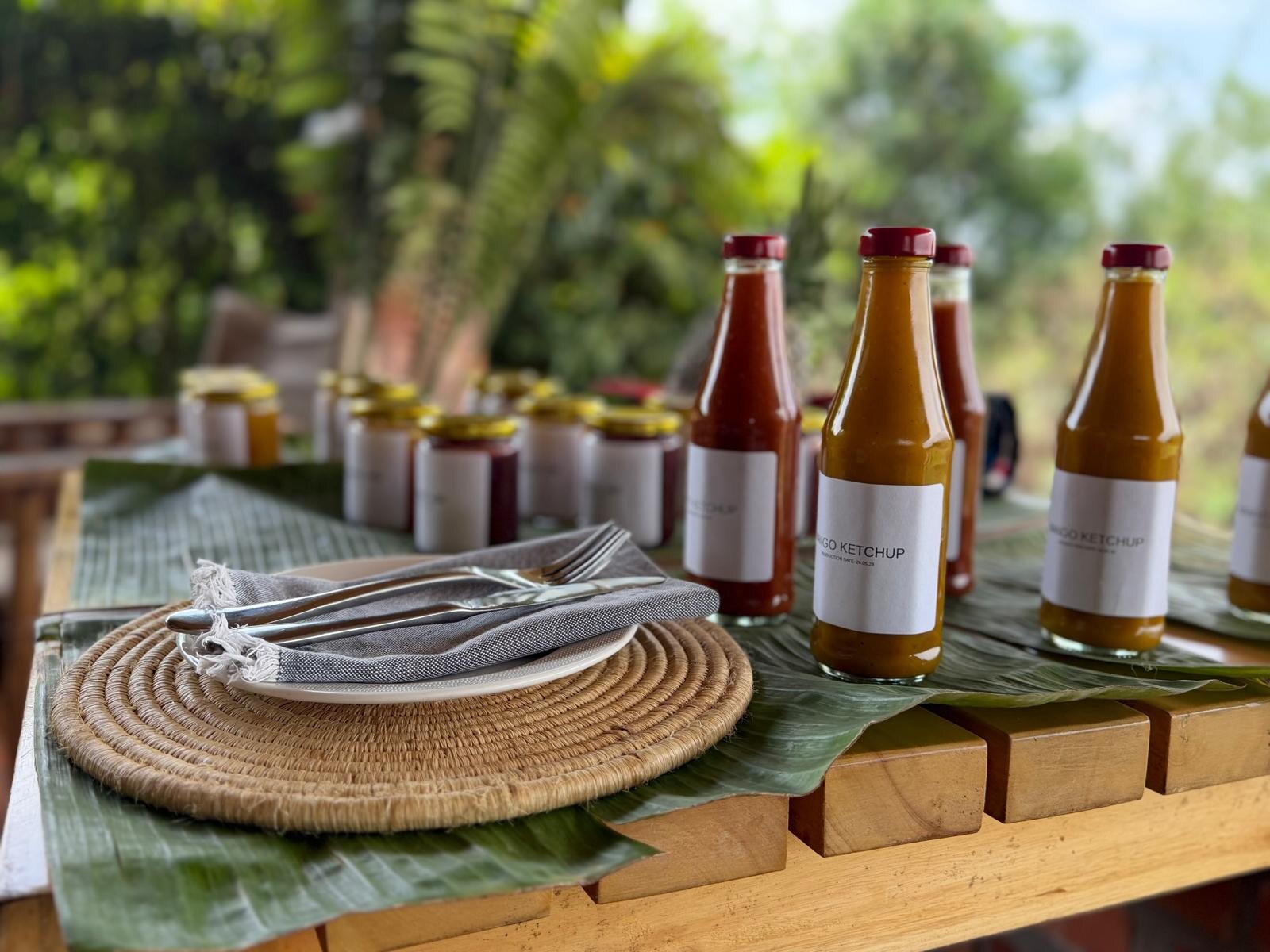
Initial production focuses on value-added products including tomato ketchup, mango ketchup, jams and fruit chutneys developed for the Ugandan hospitality sector and local retail market. Hospitality provides the first commercial market — hotels, lodges and restaurants — before expansion into wholesalers, supermarkets and local retailers.
Every production site also functions as a practical learning environment, with vocational training in food production, food safety, quality management, packaging, branding, business operations and entrepreneurship. Training is supported by the nOmy Learning Management System, so every participant builds a documented competency profile with recognised digital certification.
Just as importantly, every production facility becomes a workplace where new skills turn immediately into practical experience and employment.
Implementation model
Participants first complete competency-based vocational training before progressing into supervised production. Products are manufactured from locally sourced ingredients using internationally recognised food safety procedures before entering the hospitality market through commercial partners.
Throughout, learning, competencies and workplace experience are documented in the Learning Management System and linked to an individual Digital Skills Passport — a measurable pathway from Unskilled to Skilled to Certified to Employed to Entrepreneur.
Programme targets
What the programme sets out to achieve.
Workforce development
- Practical vocational skills developed in food production.
- Local producers trained and certified through competency-based learning.
- Documented pathways created from learning into employment.
- Continuous professional development supported through the Digital Skills Passport.
Circular food systems
- Food loss reduced through value addition.
- Higher utilisation of locally available agricultural resources.
- Commercially viable products developed for local and regional markets.
- Local supply chains strengthened.
Enterprise development
- New small-scale food businesses supported.
- Improved market access for local producers.
- Entrepreneurship strengthened through practical business training.
- Opportunities created for women and young entrepreneurs.
Market development
- Imported food products replaced with locally produced alternatives.
- Hospitality supply chains strengthened.
- Scalable production models prepared for regional expansion.
- Increased local value creation throughout the food system.
Long-term vision
CAFIP is not simply about producing ketchup, jams or chutneys. Its purpose is to demonstrate how vocational education, entrepreneurship and local manufacturing work together to create sustainable economic growth.
Combined with the Uganda Hospitality & Food Service Skills Hub, the programme forms a complete ecosystem where people develop new skills, receive recognised certification, gain practical work experience and move directly into employment or entrepreneurship.
Contact our team
Educate. Elevate. Empower.
Training programmes, partnerships and platform access all start with a conversation with our team or one of our local agents. There is no open sign-up — accounts are issued through nOmy or your organisation's administrator.
- info@nomy.co
- Head office
- nOmy Group ApS
Villestoftevej 12
2770 Kastrup, Danmark - Where we work
- Kenya · Uganda · Somaliland · Tanzania · Zanzibar · Denmark